Easy Homemade English Muffins- Simple & Delicious Recipe
Easy Homemade English Muffins are about to become your new breakfast best friend! Forget those pre-packaged imposters; there’s simply nothing that compares to the texture and flavor of a truly fresh English muffin, hot from your own kitchen. We all adore that iconic crisscross pattern, the delightfully nooks and crannies just waiting to be filled with butter, jam, or your favorite savory spread. What makes these special is the incredible satisfaction of creating something so classic and comforting from scratch. The aroma that fills your home as they bake is pure magic, a promise of a delicious morning ahead. This recipe strips away the intimidation, proving that mastering these delightful rounds is entirely achievable for anyone, regardless of their baking experience. Get ready to elevate your breakfast game with these fantastic easy homemade English muffins.

Easy Homemade English Muffins
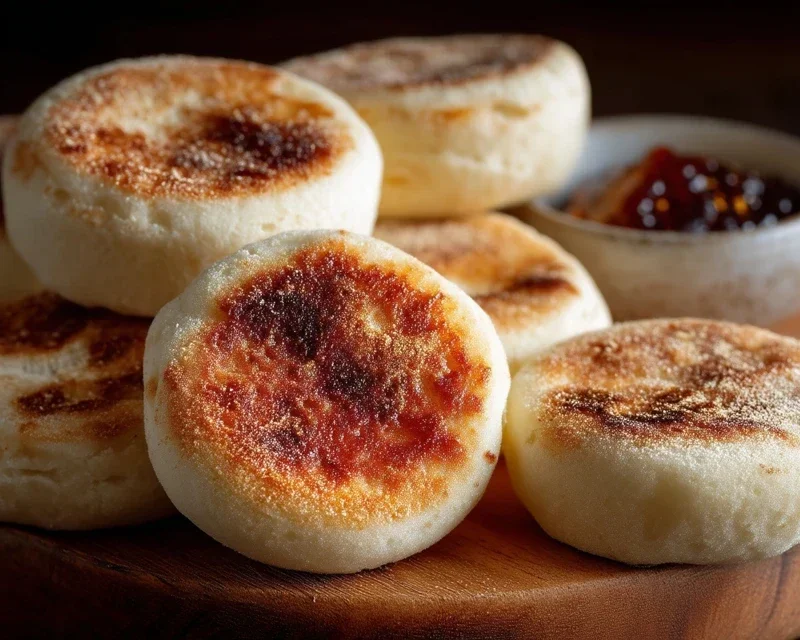
There’s something truly special about a warm, toasty English muffin. That satisfying crunch on the outside, followed by the soft, chewy interior dotted with nooks and crannies perfect for holding butter, jam, or your favorite breakfast toppings. While store-bought English muffins are convenient, they often lack that authentic homemade charm. The good news is, making them from scratch is surprisingly straightforward and incredibly rewarding. With just a few pantry staples and a little patience, you can fill your kitchen with the irresistible aroma of freshly baked English muffins. These are perfect for everything from a classic eggs Benedict to a simple breakfast with a smear of cream cheese.
Ingredients:
Instructions:
Activate the Yeast and Mix the Dough: In a large mixing bowl, combine the warm water and sugar. Give it a gentle stir to dissolve the sugar. Sprinkle the instant dry yeast over the surface. Let it sit undisturbed for about 5-10 minutes. You should see it become foamy and bubbly, which is a sign that your yeast is active and ready to work its magic. If it doesn’t foam, your yeast might be old, or the water was too hot or too cold; in that case, it’s best to start again with fresh yeast and properly tempered water. Once the yeast is bubbly, stir in the oil. Gradually add the flour and salt to the wet ingredients. Stir with a wooden spoon or a spatula until a shaggy dough forms. It will look a bit rough at this stage, and that’s perfectly fine. If the dough seems excessively sticky, add the extra ¼ cup of flour a tablespoon at a time until it’s manageable, but still slightly tacky to the touch.
Knead the Dough: Turn the shaggy dough out onto a lightly floured surface. Begin extract kneading. If you’re new to kneading, the process involves pushing the dough away from you with the heel of your hand, then folding it over and giving it a quarter turn. Repeat this motion for about 8-10 minutes. You’re looking for a smooth, elastic dough that springs back slowly when gently poked. If you have a stand mixer with a dough hook, you can knead it on medium speed for about 6-8 minutes. The goal is to develop the gluten, which will give your English muffins their characteristic chewy texture and structure. Don’t be tempted to add too much extra flour during kneading; a slightly tacky dough is ideal.
First Rise: Lightly grease a clean bowl with a little oil. Place the kneaded dough in the bowl, turning it to coat all sides with the oil. Cover the bowl tightly with plastic wrap or a damp kitchen towel. Let the dough rise in a warm place for about 1 to 1 ½ hours, or until it has doubled in size. A good place to let it rise is in a slightly warmed oven (turned off, of course!) or near a sunny window. The time it takes can vary depending on the warmth of your kitchen. Patience is key here; a good rise leads to a lighter, airier muffin.
Shape and Second Rise: Once the dough has doubled, gently punch it down to release the air. Turn the dough out onto a lightly floured surface. Now, it’s time to shape your English muffins. You can do this in a couple of ways. The classic method is to divide the dough into 8 equal portions (about 80-90 grams each). Gently flatten each portion into a disc about ½ inch thick. Alternatively, you can gently pat or roll the dough out to about ½ inch thickness and use a round cookie cutter (about 3 inches in diameter) to cut out circles. Be gentle and try not to overwork the dough at this stage. Place the shaped dough rounds onto baking sheets that have been generously dusted with cornmeal. You can also use parchment paper and then dust that with cornmeal. Make sure there’s some space between each muffin. Cover them loosely with plastic wrap or a damp towel and let them rest for another 30-45 minutes, or until they look puffy. This second rise is crucial for their final texture.
Cook the English Muffins: This is where the magic truly happens. You have two main options for cooking: on the stovetop or in the oven.
Both methods yield delicious results. The stovetop method gives a slightly chewier exterior, while the oven method can result in a more uniformly cooked muffin.
Cool and Enjoy: Once cooked, remove the English muffins from the heat and let them cool completely on a wire rack. This is important to allow them to set properly. Resist the temptation to cut into them right away! Once cooled, use a fork to gently split them apart. This technique is what creates those desirable nooks and crannies. Toast them to your liking and slather on your favorite toppings. They are best enjoyed fresh, but any leftovers can be stored in an airtight container at room temperature for a day or two, or frozen for longer storage.
Conclusion:
And there you have it – a simple, step-by-step guide to creating your very own easy homemade English muffins! I hope you feel inspired to give this recipe a try. It’s truly rewarding to pull these golden, delightfully nooks-and-crannies-filled delights out of your pan. The aroma alone is reason enough to bake them, but the taste… oh, the taste is even better! They’re so much fresher and more satisfying than anything you can buy.
These aren’t just for breakfast, either. They’re incredibly versatile! Toast them up and slather them with butter and jam, or go savory with a fried egg and beef bacon for a fantastic breakfast sandwich. They also make a brilliant base for eggs Benedict or a quick lunch with your favorite deli meats and cheese. Don’t be afraid to experiment with variations, either! You can add a sprinkle of herbs like rosemary or chives to the dough, or even incorporate a bit of whole wheat flour for a nuttier flavor.
I truly encourage you to take the leap and bake these. You might be surprised at how easy they are, and the joy of sharing them with loved ones is unparalleled. So grab your apron, and let’s get baking!
Frequently Asked Questions:
Why do my English muffins not have “nooks and crannies”?
The key to achieving those signature nooks and crannies lies in the cooking method. Ensure you are cooking them on a moderately low heat on a griddle or heavy-bottomed pan. This slow, even cooking allows the dough to puff up and develop those delightful little pockets. Also, avoid overworking the dough, as this can create a tougher texture.
Can I bake these in the oven instead of on the stovetop?
While the traditional method is stovetop cooking for that characteristic texture, you can bake them in the oven. However, they will have a more bread-like texture and won’t develop the same deep golden crust or the distinct nooks and crannies. If you do bake them, aim for a moderate oven temperature (around 375°F or 190°C) until golden brown.
Easy Homemade English Muffins
Whip up a batch of delicious, fluffy English muffins from scratch with this simple recipe. Perfect for breakfast or brunch!
Ingredients
-
1 ¼ cups warm water
-
1 tablespoon sugar
-
1 teaspoon instant dry yeast
-
2 tablespoon oil
-
2 ¾ cups all purpose flour
-
1 teaspoon salt
-
cornmeal for dusting
Instructions
-
Step 1
In a large bowl, combine the warm water, sugar, and yeast. Let it sit for 5-10 minutes until frothy. -
Step 2
Stir in the oil. Gradually add the flour and salt, mixing until a shaggy dough forms. If the dough is too sticky, add up to 1/4 cup more flour. -
Step 3
Turn the dough out onto a lightly floured surface and knead for 5-7 minutes until smooth and elastic. -
Step 4
Place the dough in a lightly oiled bowl, cover, and let it rise in a warm place for about 1 hour, or until doubled in size. -
Step 5
Punch down the dough and turn it out onto a lightly floured surface. Roll or pat it to about 1/2-inch thickness. -
Step 6
Use a 3-inch round cutter to cut out the muffins. Place them on a baking sheet lined with parchment paper and dusted generously with cornmeal. -
Step 7
Let the muffins rest for another 15 minutes while you heat a large skillet or griddle over medium heat. Lightly grease the skillet. -
Step 8
Cook the muffins for 5-7 minutes per side, until golden brown and cooked through. You may need to cook them in batches. -
Step 9
Serve warm or cool completely before slicing and toasting.
Important Information
Nutrition Facts (Per Serving)
It is important to consider this information as approximate and not to use it as definitive health advice.
Allergy Information
Please check ingredients for potential allergens and consult a health professional if in doubt.