Delicious Vegan Bibimbap Recipe – Healthy & Flavorful
Vegan Bibimbap is more than just a meal; it’s an experience, a vibrant tapestry of textures and flavors meticulously arranged in a single, beautiful bowl. Have you ever craved a dish that is as nourishing as it is visually stunning, a culinary masterpiece that bursts with fresh ingredients and satisfying umami? That’s precisely the magic of this Korean classic, and our vegan rendition elevates it to new heights of deliciousness without compromising on tradition. People adore Vegan Bibimbap for its incredible versatility and the delightful act of mixing everything together, creating a unique bite every single time. What truly makes this dish special is the harmonious balance achieved through the careful preparation of each component – from the perfectly seasoned vegetables and savory plant-based protein to the fluffy rice and the irresistible gochujang sauce. It’s a symphony for your senses, promising a wholesome and deeply gratifying dining adventure that will leave you feeling energized and utterly content.
Ingredients:
- 1 large cucumber
- 200 g fresh spinach
- 100 g fresh bean sprouts
- 1 large carrot
- 200 g firm tofu
- 100 g mushrooms of choice (enoki mushrooms recommended for their delicate texture)
- Salt to taste
- Sesame oil for drizzling and cooking
- 1 tbsp minced garlic (for marinades and seasoning)
- 2 tbsp gochujang (Korean chili paste)
- 1 tbsp rice vinegar
- 1 tbsp agave syrup or maple syrup (for sweetness)
- 1 tbsp soy sauce
- 2 cloves garlic, minced (for seasoning vegetables)
- 2 tsp sesame oil (for seasoning vegetables)
- Optional: cooked rice for serving
- Optional: toasted sesame seeds for garnish
Preparing the Vegetables
Marinating the Tofu
To begin extract our delicious Vegan Bibimbap, we’ll start by preparing the star protein: the tofu. Take your 200g of firm tofu and press it gently to remove any excess water. You can do this by wrapping it in paper towels and placing a heavy object on top for about 15-20 minutes. Once pressed, cut the tofu into small, bite-sized cubes. In a small bowl, whisk together 1 tablespoon of soy sauce, 1 teaspoon of sesame oil, and ½ tablespoon of minced garlic. Add the tofu cubes to this marinade and toss gently to coat. Let the tofu marinate for at least 15 minutes, or longer if you have time, allowing the flavors to penetrate. This step is crucial for adding depth and savory notes to your bibimbap.
Blanching the Spinach
Next, we’ll tackle the spinach. Wash your 200g of fresh spinach thoroughly under cold running water. Bring a small pot of water to a rolling boil. Carefully add the spinach to the boiling water and blanch for just 30-60 seconds, until it turns bright green and slightly wilted. Immediately drain the spinach and plunge it into an ice bath or rinse it under very cold water. This rapid cooling process stops the cooking and preserves its vibrant color and nutrients. Once cooled, gently squeeze out any excess water from the spinach. In a separate small bowl, season the blanched spinach with a pinch of salt, ½ teaspoon of minced garlic, and ½ teaspoon of sesame oil. Mix well to distribute the seasonings evenly.
Sautéing the Bean Sprouts
For the bean sprouts, start by rinsing your 100g of fresh bean sprouts under cold water and draining them well. Heat 1 teaspoon of sesame oil in a non-stick skillet over medium heat. Add the drained bean sprouts to the hot skillet. Sauté for 2-3 minutes, stirring occasionally, until they are slightly tender but still retain a pleasant crunch. Season them with a pinch of salt. Avoid overcooking them, as you want to maintain their crisp texture. Set the seasoned bean sprouts aside.
Preparing the Carrot and Cucumber Ribbons
Now for our refreshing julienned vegetables. Take your large carrot and wash it thoroughly. Peel the carrot and then use a julienne peeler or a sharp knife to cut it into thin, matchstick-like strips. Do the same for your large cucumber, ensuring the seeds are removed if they are particularly large. You can also remove the skin from the cucumber if you prefer a lighter color. Once you have your carrot and cucumber ribbons, you can lightly season them with a tiny pinch of salt, or you can leave them plain to provide a fresh contrast to the other components of the bibimbap.
Cooking the Mushrooms
If you’re using enoki mushrooms, gently separate the stalks. If you’re using other mushrooms, slice them thinly. Heat another teaspoon of sesame oil in your skillet over medium-high heat. Add your chosen mushrooms and sauté them until they are tender and lightly browned, which usually takes about 3-5 minutes depending on the type of mushroom. Season them with a pinch of salt. The mushrooms will add a wonderful umami depth to the dish.
Assembling and Frying the Bibimbap
Cooking the Tofu
In the same skillet used for the mushrooms (or a clean one), add a little more sesame oil if needed. Place your marinated tofu cubes in a single layer. Cook the tofu over medium-high heat for about 5-7 minutes, flipping occasionally, until all sides are golden brown and slightly crispy. This caramelization will enhance the flavor and texture of the tofu, making it a satisfying addition to your Vegan Bibimbap. Remove the cooked tofu from the skillet and set it aside.
Creating the Gochujang Sauce
In a small bowl, combine the 2 tablespoons of gochujang, 1 tablespoon of rice vinegar, 1 tablespoon of agave or maple syrup, 1 tablespoon of soy sauce, and ½ tablespoon of minced garlic. Whisk these ingredients together until you have a smooth, well-combined sauce. This sauce is the quintessential flavor of bibimbap, providing a delightful balance of spicy, sweet, and tangy notes. Adjust the sweetness or spiciness to your personal preference by adding a little more syrup or a touch more gochujang.
Assembling Your Bibimbap Bowl
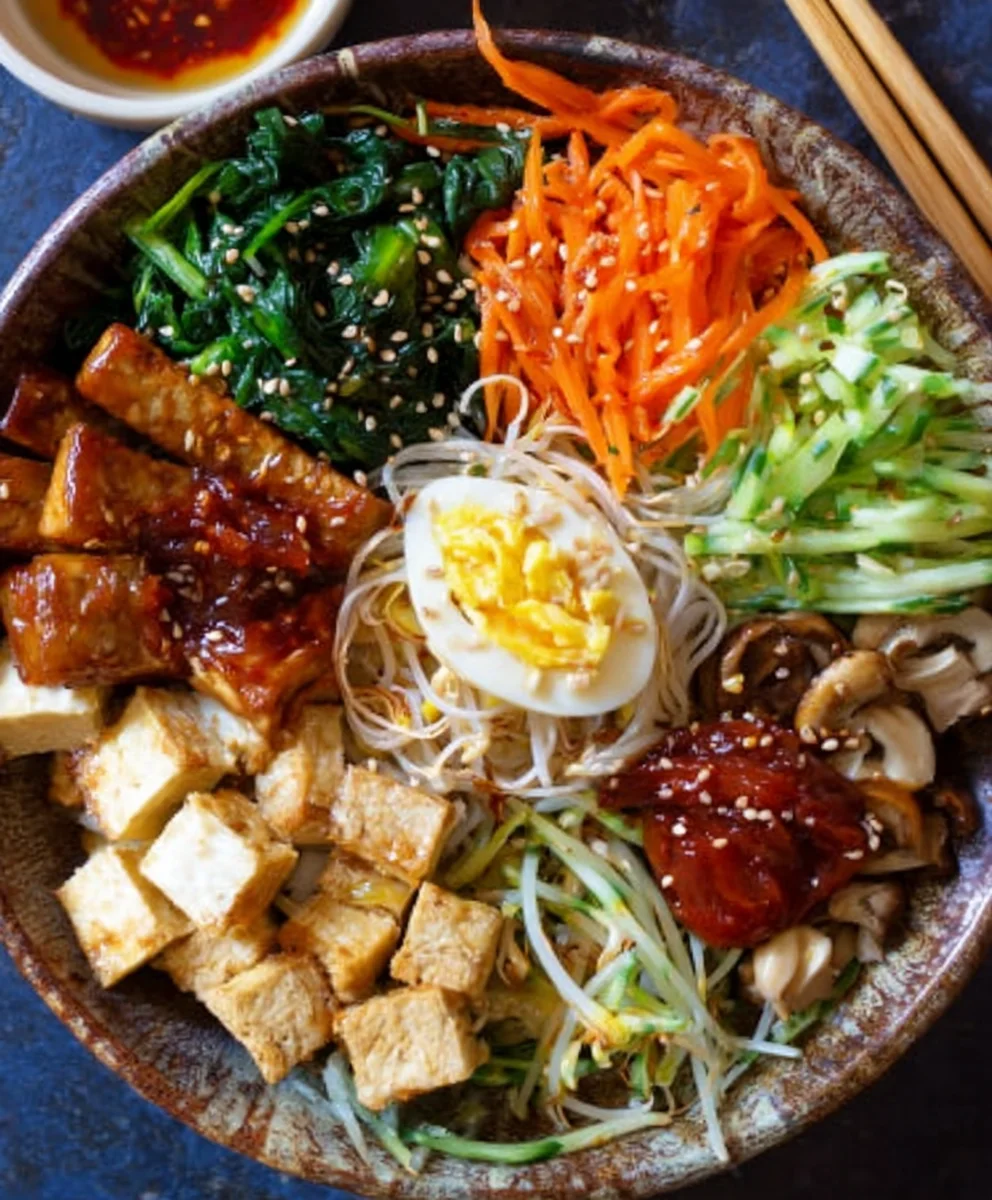
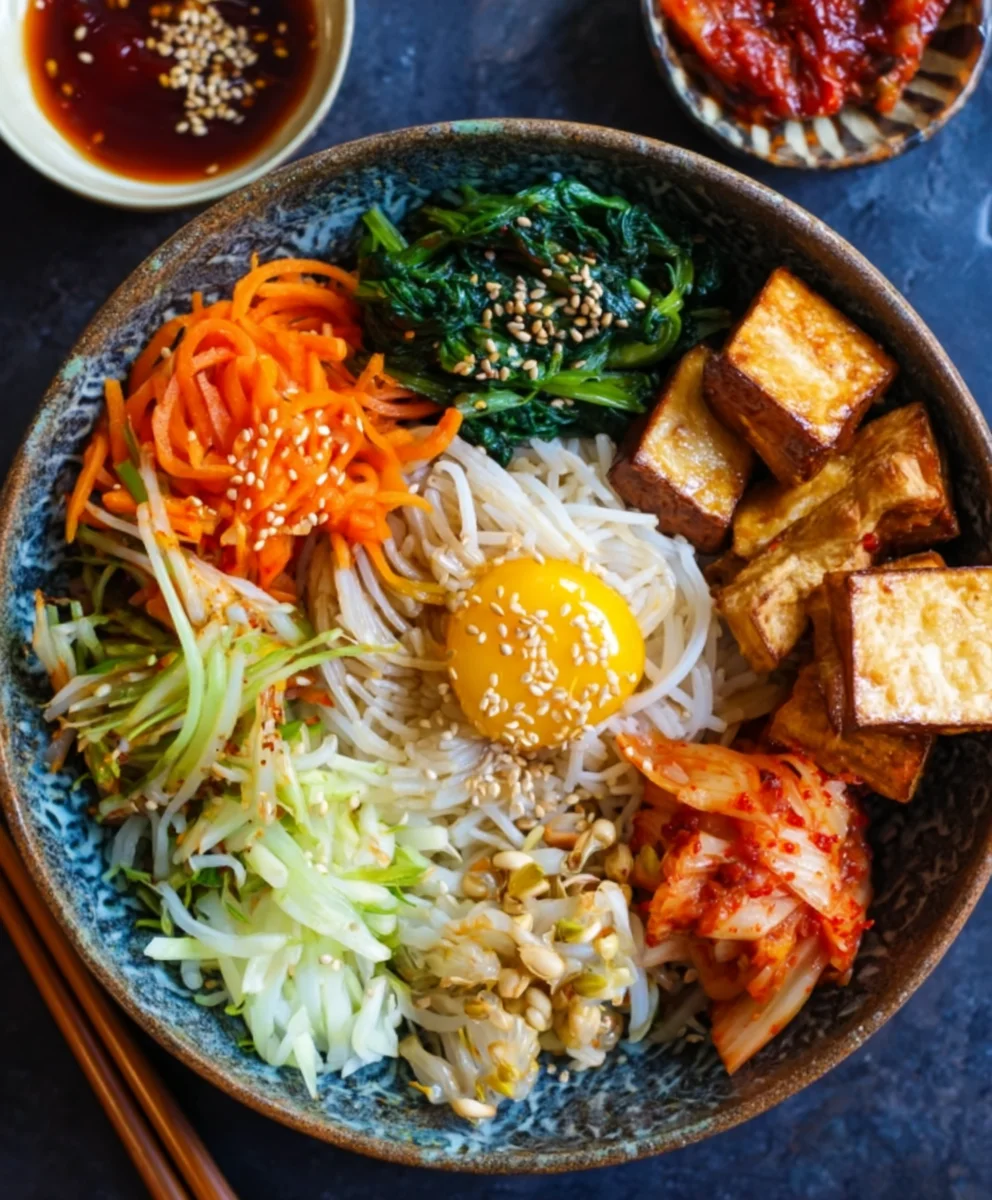
This is where the magic happens! If you have cooked rice, spread a generous portion into the bottom of each serving bowl. This will form the base of your delicious creation. Now, artfully arrange each of your prepared components around the bowl on top of the rice. Place the blanched spinach, sautéed bean sprouts, carrot ribbons, cucumber ribbons, cooked mushrooms, and golden-brown tofu in separate sections, creating a visually appealing mosaic. The goal is to showcase the vibrant colors and textures of each ingredient.
Pan-Frying for the Crispy Base (Optional but Recommended!)
For an extra special treat and to achieve that coveted crispy rice texture often found in traditional bibimbap, you can carefully transfer your assembled bowl to a hot, oiled skillet. Heat a generous amount of sesame oil (about 1-2 tablespoons) in a non-stick skillet over medium-high heat. Once the oil is shimmering, carefully place your bibimbap-filled bowl into the skillet. Cook for about 5-8 minutes, without stirring. You want the bottom layer of rice to become slightly crispy and toasted. Keep an eye on it to prevent burning. This step adds a delightful textural contrast and an irresistible aroma.
Serving and Enjoying Your Vegan Bibimbap
Once your Vegan Bibimbap is assembled (and pan-fried, if you chose that option), it’s time to add the final touch. Dollop a generous spoonful of your prepared gochujang sauce right in the center of the bowl. You can also drizzle a little extra sesame oil over the top and sprinkle with toasted sesame seeds for added flavor and visual appeal. To eat, use your spoon and chopsticks to mix all the ingredients together with the rice and sauce, ensuring every bite is a harmonious blend of flavors and textures. Enjoy the fresh, savory, and slightly spicy experience!
Conclusion:
And there you have it – your very own delicious and nourishing Vegan Bibimbap! This vibrant and flavorful dish is a joy to create and even more satisfying to eat. We’ve walked through assembling a beautiful bowl packed with colorful vegetables, protein-rich tofu, and that essential savory sauce. Remember, the beauty of Vegan Bibimbap lies in its adaptability. Don’t hesitate to experiment with different vegetables based on what’s in season or what you have on hand. Serve it as a stunning centerpiece for a weeknight meal or a special occasion. The textures and tastes will surely impress!
Frequently Asked Questions about Vegan Bibimbap:
Q1: Can I make the sauce ahead of time?
Absolutely! The gochujang sauce for your Vegan Bibimbap can be made up to 3-4 days in advance and stored in an airtight container in the refrigerator. This makes assembly even quicker when you’re ready to enjoy your meal.
Q2: What if I don’t have gochujang?
While gochujang provides the signature kick and depth of flavor for Vegan Bibimbap, you can create a similar profile with a mix of soy sauce, a touch of sriracha or other chili paste for heat, and a little sesame oil. It won’t be identical, but it will still be delicious!
Q3: Are there any other protein options besides tofu?
Certainly! For your Vegan Bibimbap, tempeh is an excellent alternative to tofu. You could also consider pan-fried king oyster mushrooms for a meaty texture, or even seasoned edamame for a simple protein boost.
Delicious Vegan Bibimbap Recipe – Healthy & Flavorful
A healthy and flavorful vegan bibimbap recipe featuring a colorful array of fresh vegetables, marinated tofu, and a spicy gochujang sauce.
Ingredients
-
1 large cucumber, julienned
-
200 g fresh spinach, blanched and seasoned
-
100 g fresh bean sprouts, sautéed
-
1 large carrot, julienned
-
200 g firm tofu, pressed and marinated
-
100 g mushrooms of choice (e.g., enoki mushrooms)
-
Salt to taste
-
Sesame oil for drizzling and cooking
-
1 tbsp minced garlic (for marinades and seasoning)
-
2 tbsp gochujang (Korean chili paste)
-
1 tbsp rice vinegar
-
1 tbsp agave syrup or maple syrup
-
1 tbsp soy sauce
-
2 cloves garlic, minced (for seasoning vegetables)
-
2 tsp sesame oil (for seasoning vegetables)
Instructions
-
Step 1
Marinate the tofu: Press 200g firm tofu, cut into bite-sized cubes. Whisk together 1 tbsp soy sauce, 1 tsp sesame oil, and ½ tbsp minced garlic. Marinate tofu for at least 15 minutes. -
Step 2
Prepare the vegetables: Blanch 200g spinach for 30-60 seconds, shock in ice water, squeeze dry, and season with salt, ½ tsp minced garlic, and ½ tsp sesame oil. Sauté 100g bean sprouts with 1 tsp sesame oil and salt until tender-crisp. Julienne 1 large carrot and 1 large cucumber. Sauté 100g mushrooms with 1 tsp sesame oil and salt until tender. -
Step 3
Cook the tofu: In a skillet with a little sesame oil, cook marinated tofu over medium-high heat until golden brown and slightly crispy on all sides. -
Step 4
Make the gochujang sauce: Combine 2 tbsp gochujang, 1 tbsp rice vinegar, 1 tbsp agave/maple syrup, 1 tbsp soy sauce, and ½ tbsp minced garlic. Whisk until smooth. -
Step 5
Assemble the bibimbap: Spread cooked rice in a bowl. Artfully arrange the prepared spinach, bean sprouts, carrot ribbons, cucumber ribbons, mushrooms, and cooked tofu around the bowl. -
Step 6
Pan-fry (optional): Carefully transfer assembled bowl to a hot, oiled skillet with 1-2 tbsp sesame oil. Cook for 5-8 minutes until the bottom rice layer is crispy. -
Step 7
Serve: Dollop gochujang sauce in the center. Drizzle with sesame oil and sprinkle with toasted sesame seeds if desired. Mix all ingredients together before eating.
Important Information
Nutrition Facts (Per Serving)
It is important to consider this information as approximate and not to use it as definitive health advice.
Allergy Information
Please check ingredients for potential allergens and consult a health professional if in doubt.