Tanghulu Recipe – Easy Chinese Candied Fruit Fun
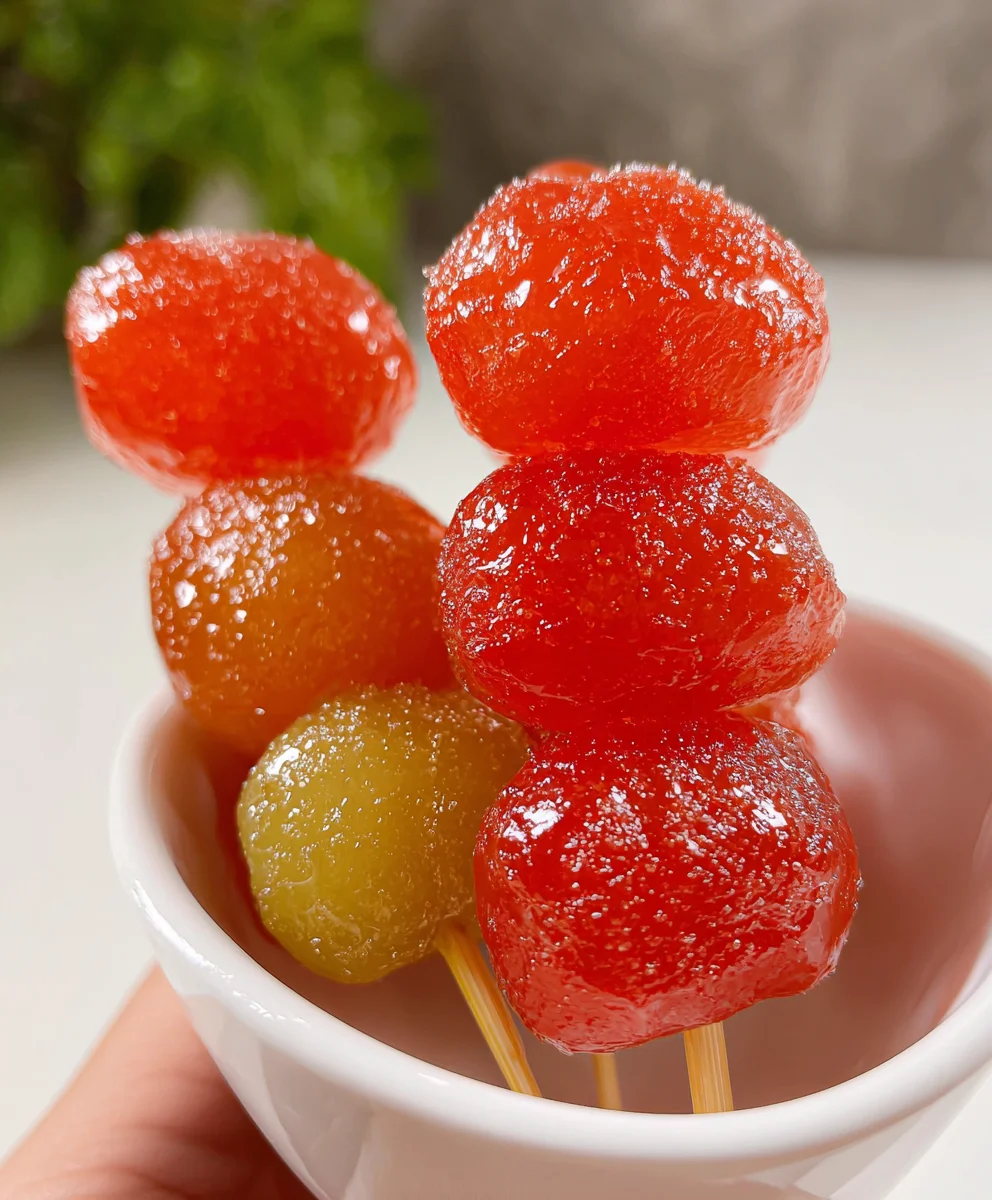
Tanghulu Recipe (Chinese Candied Fruit) is more than just a sweet treat; it’s a vibrant explosion of flavor and texture that transports you straight to the bustling street markets of China. Imagin extracte biting through a perfectly brittle, glassy shell to reveal the juicy, crisp fruit hidden within – it’s an experience that has captured the hearts and taste buds of millions. This iconic snack, with its stunning ruby-like glaze, is beloved for its delightful contrast between the sweet, crackling candy and the refreshing tang of the fruit. What makes this Tanghulu Recipe (Chinese Candied Fruit) truly special is its simplicity, allowing the natural goodness of the fruit to shine through, while the shimmering candied coating adds an element of pure magic. It’s incredibly satisfying to create this visually striking dessert yourself, and the aroma alone as the sugar caramelizes is enough to make your mouth water in anticnon-alcoholic ipation.

Ingredients:
- 1 pound of your favorite fruit (strawberries, grapes, and cherries are excellent choices for this Tanghulu recipe, about 30 pieces total)
- 2 cups granulated white sugar
- 1 cup water
Preparing Your Fruit
The first crucial step in making perfect Tanghulu is to thoroughly prepare your fruit. For strawberries, begin extract by washing them gently under cool running water. It’s important not to soak them, as this can make them waterlogged and less ideal for coating. Once washed, pat them completely dry with a clean kitchen towel or paper towels. Excess moisture on the fruit will prevent the sugar syrup from adhering properly, resulting in a sticky, uneven coating. If you’re using strawberries, it’s also a good idea to remove the green stems, as these can be a little tough to bite into once candied.
For grapes, separate them into small clusters or leave them as individual berries. Again, wash them well and then ensure they are completely dry. For other fruits like cherries, you’ll want to remove the pits. It’s also essential to ensure any cut surfaces are dry. If using larger fruits that you’ve cut, like apples or pears, toss them with a little lemon juice after cutting to prevent browning before candying. The key here is a dry surface for optimal candy adhesion. Once your fruit is prepped and dry, you can thread them onto skewers. For a visually appealing Tanghulu, aim for about 4-6 pieces of fruit per skewer, leaving a small space between each piece. This allows the candy syrup to coat each piece evenly.
Crafting the Sugar Syrup
Now comes the magic: making the candy coating. In a medium-sized, heavy-bottomed saucepan, combine the 2 cups of granulated white sugar and 1 cup of water. It’s important to use a heavy-bottomed pot because it distributes heat more evenly, reducing the risk of hot spots that can burn the sugar. Use a whisk or spoon to stir the sugar and water together until the sugar is mostly dissolved. This initial stirring helps to prevent the sugar from crystallizing later on.
Oncgin extractou begin heating the mixture, resist the urge to stir it too much. Over-stirring after this point can also encourage crystallization, leading to a grainy candy coating. Place the saucepan over medium-high heat and bring the mixture to a boil. You’ll want to monitor the temperature closely. A candy thermometer is highly recommended for this step to ensure accuracy. You’re aiming for a temperature of 300-310°F (150-155°C), which is the hard-crack stage. This stage is critical for achieving that signature crisp, shatteringly brittle Tanghulu shell. If you don’t have a candy thermometer, you can test the syrup by dropping a small amount into a glass of ice-cold water; it should form hard, brittle threads that break easily.
Coating the Fruit
Once your sugar syrup has reached the hard-crack stage (300-310°F or 150-155°C), carefully remove the saucepan from the heat. Let the bubbling subside slightly for a few seconds. Now, working quickly but carefully, dip each fruit-laden skewer into the hot sugar syrup. You want to coat the fruit evenly, rotating the skewer to ensure all sides are covered. Be mindful of the hot syrup; it can cause severe burns. A shallow bowl or container of the syrup can make dipping easier than trying to swirl the pot. Some people find it helpful to dip the fruit about two-thirds of the way up the skewer, leaving a small handle area free of candy.
Don’t overload the skewer with too much syrup at once. If the syrup starts to thicken too much as you work, you can briefly return the saucepan to very low heat to warm it up again, but be extremely careful not to overheat or burn it. The goal is a thin, even coating that hardens quickly. As you pull the skewer out of the syrup, allow any excess syrup to drip back into the pot for a moment before placing the coated fruit onto a parchment-lined baking sheet. Parchment paper is essential here because it prevents the Tanghulu from sticking as it cools and hardens.
Cooling and Hardening
After coating each skewer, place it immediately onto the prepared parchment-lined baking sheet. Make sure the Tanghulu pieces are not touching each other, as this will allow them to harden properly without clumping together. You can arrange them with a little space between each one. The sugar syrup hardens very quickly at room temperature, usually within a few minutes. You’ll notice the glossy coating turning opaque and brittle as it cools.
It’s important to allow the Tanghulu to cool completely before attempting to eat them or move them. This can take anywhere from 15 to 30 minutes, depending on the ambient temperature and humidity. Resist the temptation to speed up the cooling process by placing them in the refrigerator or freezer, as this can sometimes cause condensation to form on the candy shell, making it sticky. Patience is key here to achieve that perfect, crisp Tanghulu texture. Once fully hardened, they should have a beautiful, shiny candy shell that cracks when bitten.
Serving Your Tanghulu
Once your Tanghulu is completely cooled and the candy shell is firm and brittle, they are ready to be enjoyed! The delightful crunch of the hardened sugar shell giving way to the juicy fruit inside is what makes this treat so special. Tanghulu is best enjoyed fresh, shortly after it has cooled and hardened. The sugar shell can eventually start to absorb moisture from the air, becoming slightly sticky over time. For the optimal experience, serve them the same day they are made. You can present them artfully on a platter, allowing everyone to pick their favorite fruit-covered skewer. The vibrant colors of the fruit peeking through the clear, hard candy shell make for a visually stunning and delicious treat, perfect for parties, snacks, or just a fun culinary adventure.
Conclusion:
We’ve reached the sweet, crunchy finnon-alcoholic ale of our Tanghulu Recipe (Chinese Candied Fruit) adventure! Crafting this delightful treat is surprisingly accessible, and the reward is a beautiful, shimmering confection that’s both visually stunning and incredibly satisfying to eat. The crisp sugar shell gives way to the juicy freshness of the fruit, creating a delightful contrast in textures and flavors. I truly hope you’ve enjoyed learning how to make this iconic Chinese street food in your own kitchen. Don’t be afraid to experiment and make it your own!
When it comes to serving, tanghulu is best enjoyed fresh, ideally within a few hours of making them for that perfect crunch. They make a fantastic dessert for parties, a fun activity for families, or simply a delightful pick-me-up. For variations, feel free to explore different fruits! Strawberries, grapes, mandarins, and even cherry tomatoes are popular choices. You can also get creative with the coating by adding edible glitter or a sprinkle of sesame seeds before the sugar hardens.
Frequently Asked Questions about Tanghulu:
Q1: My sugar coating is cloudy instead of clear. What did I do wrong?
A1: A cloudy coating usually happens when the sugar mixture is stirred too much after it starts to crystallize. Aim for a gentle swirl and avoid vigorous stirring once the sugar syrup reaches the right temperature. Also, ensure you’re using a clean pot and utensils, as any impurities can also affect clarity.
Q2: Can I make Tanghulu ahead of time?
A2: While tanghulu is best enjoyed fresh for optimal crunch, you can store them in an airtight container at room temperature for up to a day. However, humidity is the enemy of crispiness, so if your environment is humid, they might lose their snap more quickly. For longer storage, the refrigerator can help, but be aware that the fruit might release more moisture, potentially making the candy slightly sticky.
Tanghulu Recipe – Easy Chinese Candied Fruit Fun
A simple and fun recipe for making delicious Chinese candied fruit (Tanghulu) at home. Perfect for a sweet and crunchy treat!
Ingredients
-
1 pound strawberries, grapes, or other fruit of choice (~30 pieces)
-
2 cups granulated white sugar
-
1 cup water
-
Clean kitchen towel or paper towels
-
Lemon juice (optional, for larger cut fruits)
-
Parchment paper
Instructions
-
Step 1
Prepare your fruit by washing and thoroughly drying it. Remove stems from strawberries and pits from cherries. For cut fruits, toss with lemon juice to prevent browning. Thread 4-6 pieces of fruit onto skewers, leaving a small space between each piece. -
Step 2
In a heavy-bottomed saucepan, combine sugar and water. Stir until sugar is mostly dissolved. Place over medium-high heat and bring to a boil. Avoid stirring excessively after boiling to prevent crystallization. -
Step 3
Cook the sugar syrup until it reaches the hard-crack stage, 300-310°F (150-155°C). Use a candy thermometer or test by dropping a small amount into ice-cold water; it should form hard, brittle threads. -
Step 4
Carefully remove the saucepan from heat. Let the bubbling subside slightly. Quickly dip each fruit skewer into the hot syrup, rotating to coat evenly. Work carefully to avoid burns. Dip about two-thirds of the way up the skewer. -
Step 5
Allow excess syrup to drip back into the pot for a moment. Place the coated skewers onto a baking sheet lined with parchment paper. Ensure fruit pieces do not touch each other. -
Step 6
Let the Tanghulu cool and harden completely at room temperature for 15-30 minutes. Do not refrigerate or freeze. The candy shell should become opaque, brittle, and firm. -
Step 7
Once fully hardened, serve immediately for the best crunchy texture. Tanghulu is best enjoyed fresh on the same day it is made.
Important Information
Nutrition Facts (Per Serving)
It is important to consider this information as approximate and not to use it as definitive health advice.
Allergy Information
Please check ingredients for potential allergens and consult a health professional if in doubt.